Minnesota Plastic Fabrication.
Custom and prototype parts via CNC routing, line bending, die cutting, and polishing, plus screen and digital printing and assemblies that can include non-plastic materials.
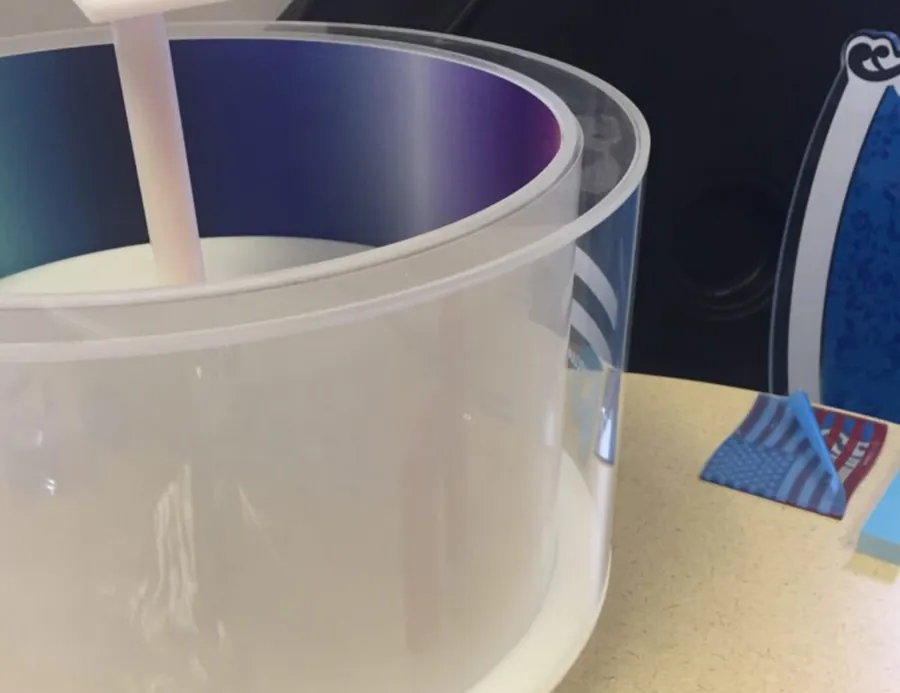
Custom, prototype, quick-turn.
Fabrication builds parts without hard tooling, so it's the fastest path to prototypes, low volumes, displays, and fixtures, and a flexible way to combine operations on one part.
CNC routing, line bending, die cutting, and polishing are paired with printing and full assembly, including non-plastic components.
- Quick-turn prototyping. Parts without the wait for tooling.
- CNC routing & cutting. Tight, repeatable machined parts.
- Line bending & forming. Clean folds and formed shapes.
- Assemblies incl. non-plastic. Complete, finished assemblies.
A Minnesota fabrication partner.
Plastic Alternatives has worked with Minnesota manufacturers since 1989. We’re based in Independence, in the Minneapolis-Saint Paul area, and most of our customers are within a short drive, so print reviews and quality conversations happen face to face when they need to.
Production runs through our U.S. manufacturing partner network under our ISO 9001:2015 quality system, so parts ship Made in the USA wherever you are.
- Twin Cities metro. Minneapolis, Saint Paul, Bloomington, Plymouth, Maple Grove, Eden Prairie, Minnetonka, and across the metro.
- Greater Minnesota. Rochester, St. Cloud, Duluth, Mankato, and manufacturers throughout the state.
- Nationwide. Programs ship across the United States from our domestic partner network.
- Talk to a principal. The people who quote your job are the people who guide it. Meet Steve and Spencer.
From print to production.
Design & quick-turn prototyping
We turn prototypes fast, with no hard tooling required.
CNC routing & cutting
Parts machined and die-cut to spec.
Line bending & forming
Precise bends and formed geometry.
Printing & finishing
Screen/digital printing and polishing.
Assembly
Full assembly, including non-plastic materials.
Sheet and rod that fabricate cleanly.
Fabrication starts from sheet and rod that machine, bend, bond, and polish cleanly. These are the usual choices, and we’ll help you narrow it down.
| Material | Strengths | Watch-outs | Typical use |
|---|---|---|---|
| Acrylic (PMMA) | Clarity, weatherability, polishes well | Brittle, scratches | Displays, lenses, signage |
| Polycarbonate (PC) | High impact, clarity, heat resistance | Cost, notch-sensitive | Guards, lenses, housings |
| PETG | Clarity, toughness, thermoforms and fabricates easily | Scratches, lower heat resistance | Guards, displays, medical packaging |
| PVC | Rigid or flexible, chemical and flame resistance | Temperature, processing | Profiles, trim, channels |
| Polyethylene (HDPE) | Tough, chemical-resistant | Low stiffness | Tanks, containers |
| ABS | Rigid, good cosmetics, easy to finish | Lower chemical resistance | Enclosures, consumer parts |
Design it to fabricate.
Fabrication is the fast path for prototypes and low volumes, and the only path for some large or one-off parts. The best parts are designed with the process in mind from the start.
- Standard sizes. Design to standard sheet and rod sizes.
- Bend radii. Respect minimum bend radii in line bending.
- Edge finish. Call out edge finish (machined, flame-polished, or buffed) wherever it shows.
- Realistic tolerances. Tighter-than-needed tolerances add cost. We’ll tell you what’s achievable.
Where it fits.
- Prototypes. Functional parts, fast, before committing to tooling.
- Displays & signage. Polished, printed, retail-ready.
- Fixtures & jigs. Shop fixtures and tooling aids.
- Enclosures & guards. Machine guards and custom housings.
Fabricate now, tool later.
Fabrication carries minimal tooling cost, so it wins for one-offs, prototypes, and low volumes. You can start in fabrication or forming, then move to injection tooling once volume justifies it, and we quote both routes.
| Process | Best for | Typical volume | Tooling cost |
|---|---|---|---|
| Plastic Fabrication | Prototypes & custom one-offs | One-off to low | Minimal |
| Vacuum / Thermoforming | Large, thin-walled parts | Low to medium | Lower |
| Rotational Molding | Hollow, seamless parts | Low to medium | Moderate |
| Injection Molding | Precision parts at scale | Medium to high | Higher |
On the floor.
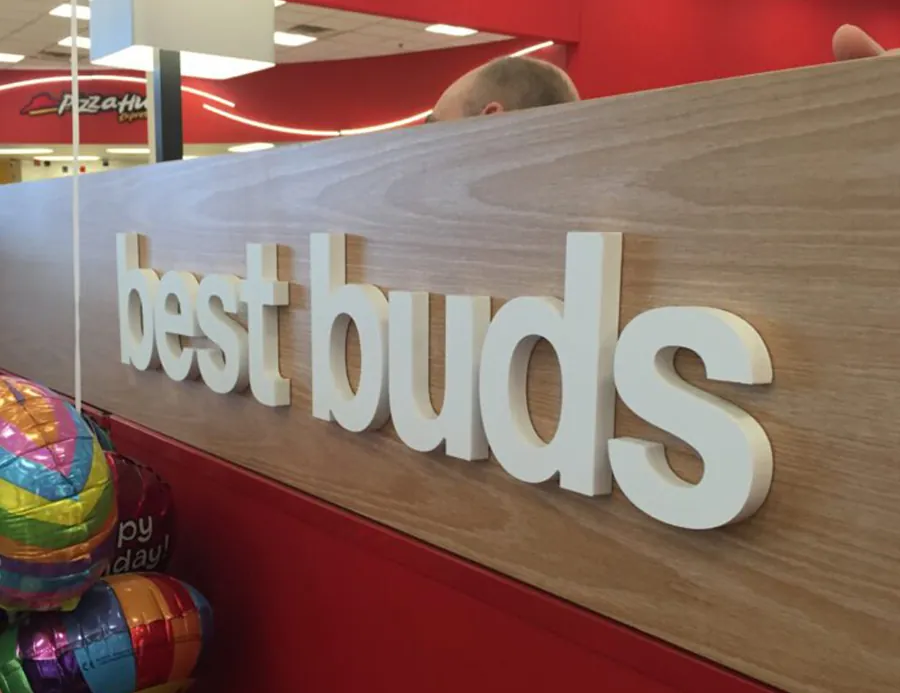
Real parts and tooling, produced through our U.S. manufacturing partner network.

Common questions.
Can you make prototypes quickly?
Can assemblies include metal or other materials?
What printing do you offer?
Where are you located?
What plastics do you fabricate?
When should a fabricated part move to molding?
Do you review designs before quoting?
Ready to quote it?
Send your part or print for plastic fabrication and we'll turn a quote around quickly.